
Office kitchens serve as vital hubs in a business, providing employees, clients, and visitors with a space to prepare and enjoy food, take breaks, and engage in informal meetings. However, the shared nature of these spaces means that they are also prone to clutter, mess, and the spread of germs. Keeping an office kitchen clean is not only crucial for maintaining a professional appearance, but it also contributes to the overall health and well-being of everyone using the area.
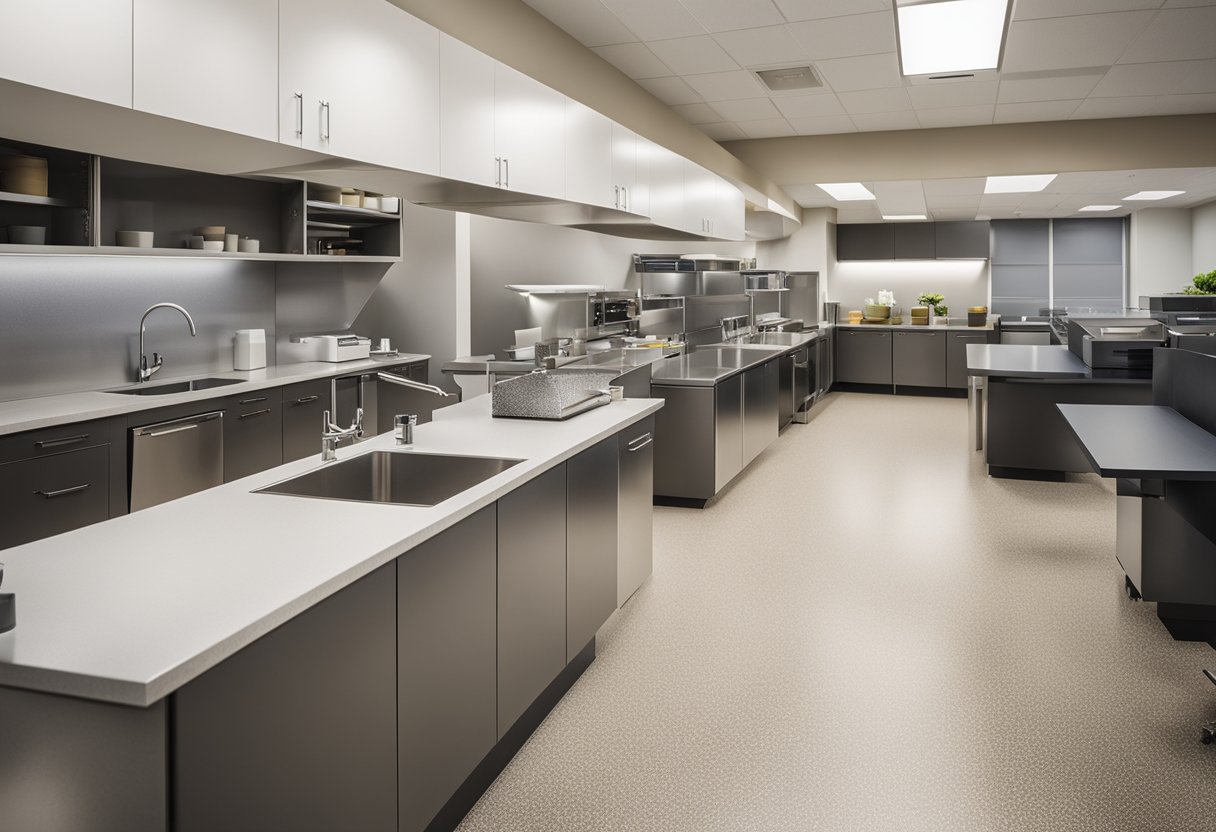
Structured cleaning protocols are useful in managing office kitchen cleanliness. A clear schedule should be established and communicated to all staff members, delineating their responsibilities for maintaining the space. This can include daily tasks like wiping down surfaces and managing refuse, weekly chores such as cleaning appliances, and less frequent activities aimed at tackling tougher areas, like the spaces behind refrigerators or inside cupboards. Or, better still, organise an office cleaning service.
A well-organised kitchen goes a long way in preventing clutter and keeping the area tidy. Providing specified spots for dishes, cutlery, and cleaning supplies ensures that items are easily accessible and reduces the time spent searching for them. This level of organisation not only enhances efficiency in the kitchen but also simplifies the cleaning process, allowing employees to focus more on their work and less on untidiness.
Daily Cleaning Rituals
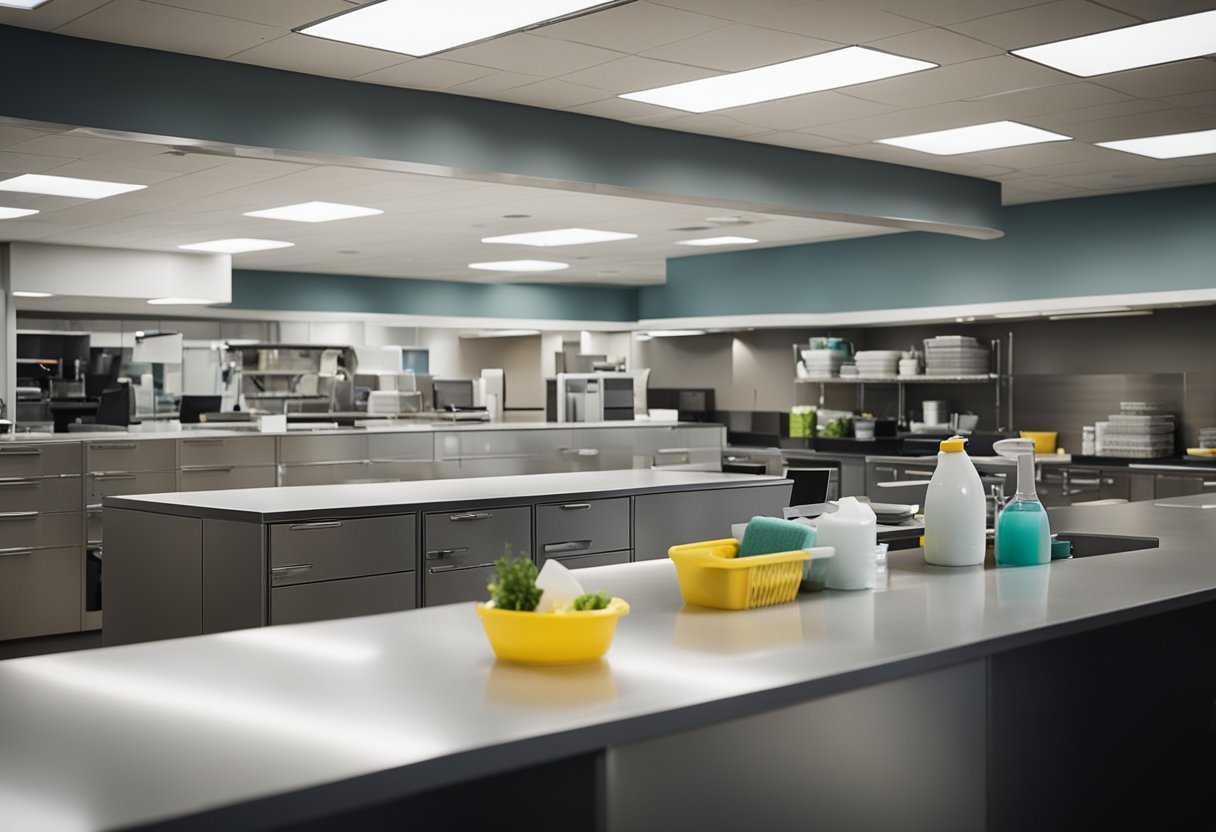
Maintaining a clean office kitchen requires consistent attention to daily tasks, ensuring hygiene standards are upheld and surfaces remain free from debris.
Countertop Maintenance
They must wipe down countertops regularly with appropriate cleaning supplies to remove crumbs and spills. A solution of water and vinegar can serve as an effective and eco-friendly cleaning agent. Ensuring that countertops are kept clean not only maintains hygiene but also makes the kitchen a pleasant space for all users.
Dish Handling and Sink Upkeep
Plates and cutlery should be washed immediately after use with dish soap or placed in the dishwasher to prevent the sink area from becoming cluttered and unhygienic. They should clean the sink daily with a scrubber and a mixture of dish soap and warm water to remove food particles and maintain the cleanliness of this high-use area.
| Task | Tool | Frequency |
|---|---|---|
| Scrub sink | Sponge/scourer | Daily |
| Wash dishes | Dish soap/washing-up liquid | As needed |
| Clean surfaces | Soft cloth | After use |
Appliance Care
Keep appliances clean, such as the microwave, coffee maker, fridge, and toaster daily. It’s important to focus on touchpoints like microwave buttons and fridge handles. They should wipe down these surfaces with a damp cloth and mild detergent. Additionally, any spills in the microwave or fridge need prompt attention to prevent odours or stains.
- Microwave: Wipe the interior with a microwave-safe cleaning solution.
- Coffee Maker: Rinse out the pot and clean the grounds basket after every use.
- Fridge: Check for and remove any expired items and wipe surfaces.
- Toaster: Empty the crumb tray and wipe the exterior.
Regular cleaning and hygienic practices in an office kitchen contribute to the overall well-being of everyone using the space.
Weekly Deep Cleaning Tasks
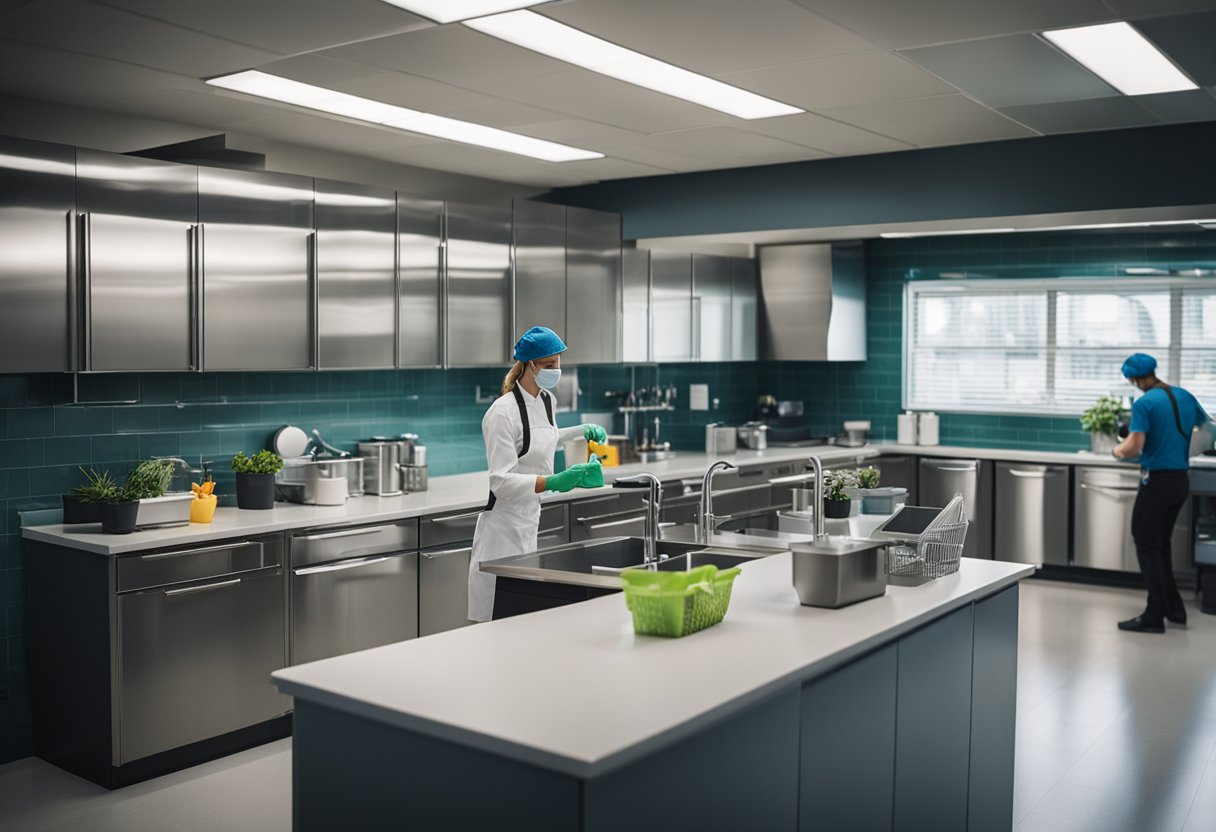
In order to maintain a hygienic and pleasant office kitchen, certain tasks should be performed on a weekly basis. These activities are essential in controlling bacteria and preventing health issues amongst staff members.
Refrigerator Clean-Out
Every week, the refrigerator should undergo a thorough cleaning to prevent food waste from becoming a health hazard. One should start by emptying all contents and discarding any expired food items. Shelves, drawers, and compartments need to be wiped down with an appropriate cleaning solution to eliminate bacteria and spills. It’s advisable to incorporate a rotating system for storing communal items to ensure that older products are used first, reducing the chance of spoilage.
Floors and Rubbish Management
Weekly, floors require a deep clean to remove debris and food particles that can attract pests. A damp mop with a disinfecting cleaner should be used after sweeping or vacuuming. Attention should be paid to areas beneath appliances and along the edges where grime can accumulate. Rubbish bins ought to be emptied and cleaned regularly to avoid overflow and the proliferation of germs. The interior of bins should be cleaned with a sanitising solution to mitigate the risk of making anyone sick and to manage unpleasant odours effectively.
Maintaining a Healthy Kitchen Environment

Creating a healthy kitchen environment in the office requires a focus on minimising clutter for better hygiene, and adhering to strong cleanliness practices to avert the proliferation of harmful germs and bacteria.
Storage and Clutter Reduction
A tidy storage system is pivotal in keeping the office kitchen functional and healthy. Utilise cupboards and shelves effectively to avert overflow and reduce clutter on countertops. This not only enhances the appearance of the kitchen but also mitigates the risk of food waste contamination. Food storage should be well-organised, with clear labelling and regular checks to dispose of expired items.
- Best Practices for Storage:
- Regularly organise cupboards and refrigerator.
- Clearly label all food items with use-by dates.
- Designate specific areas for different types of food to prevent cross-contamination.
Hygiene and Preventing Illness
Hygiene is of the utmost importance in preventing illness in an office environment. Surfaces that come into frequent contact with individuals should be cleaned daily with appropriate cleaning agents to eliminate bacteria and harmful germs. Hand sanitiser stations and paper towels should be readily accessible to encourage regular handwashing and surface cleaning. Replace sponges frequently to prevent them from becoming a breeding ground for germs.
- Hygiene Checklist:
- Provide hand sanitiser and paper towels at multiple points.
- Use a disinfectant for daily surface cleaning.
- Keep a regular schedule for replacing sponges and dishcloths.
Policies and Responsibilities
Maintaining a tidy office kitchen requires clear guidelines and shared responsibilities. It involves both the personnel engaged in day-to-day upkeep and potentially a commercial cleaning service for more in-depth tasks. Policies should be devised to sustain cleanliness and hygiene, which, in turn, projects a professional image to both visitors and clients.
Office Kitchen Etiquette Rules
Establishing office kitchen etiquette creates a foundation for a clean and harmonious environment. Key rules should include:
- Clean as You Go: Employees must clean up after themselves immediately after use, which includes washing or rinsing dishes and placing them in the dishwasher.
- Respect Shared Spaces: Workers should be considerate of fellow colleagues by not leaving food items or personal belongings in communal areas.
| Days | Responsibilities |
|---|---|
| Daily | Wiping down surfaces, cleaning dishes, emptying bins |
| Weekly | Organising the refrigerator, checking for expired items |
| Monthly | Deep cleaning appliances, decluttering cupboards |
Staff Engagement and Cleaning Services
Engaging employees is paramount for a consistently clean office pantry. A cleaning chore chart can promote responsibility and ensure tasks are completed. This may involve:
- Designated Cleanup Roles: Assigning specific cleaning tasks to staff members, like organising the refrigerator weekly.
- Rotational Duties: Rotating these chores can prevent the burden from falling on a few individuals and foster team effort.
For comprehensive office cleaning, hiring a commercial cleaning service becomes necessary. The service can be scheduled for periodic deep cleaning tasks that go beyond daily maintenance, like deep cleaning of floors and appliances. It is imperative to ensure the chosen service complies with the industry’s hygiene standards and has a track record of reliability and excellence.
Frequently Asked Questions
Maintaining an office kitchen requires consistent effort and attention to detail. These frequently asked questions offer guidance on effective cleaning practices and help ensure a hygienic environment for all employees.
What is the best method for maintaining cleanliness in communal kitchen areas?
The most effective approach for maintaining cleanliness in communal kitchen areas is to create and adhere to a cleaning schedule. This should partition tasks into daily, weekly, and monthly duties and should be visible to all employees to encourage shared responsibility.
How often should an office kitchen undergo a deep clean?
An office kitchen should undergo a deep clean at least once a month to address areas that are not typically covered during routine cleaning. This schedule may need to be more frequent depending on the level of use and specific needs of the office environment.
In what order should kitchen appliances be cleaned to ensure hygiene?
Kitchen appliances should be cleaned starting with those that are used most frequently and come into contact with food, such as microwaves and refrigerators. It is practical to clean from top to bottom to prevent re-contamination of surfaces.
What eco-friendly products can be used for effectively sanitising office kitchens?
Eco-friendly products like vinegar, baking soda, and plant-based commercial cleaners can be effective for sanitising office kitchens. These products minimise environmental impact while providing adequate cleaning power.
How can one encourage colleagues to participate in keeping the kitchen clean?
Encouraging colleagues to participate can be achieved by creating a chore chart, offering incentives for compliance, and fostering an office culture that values cleanliness and respect for shared spaces.
What are some time-saving strategies for daily upkeep of office kitchen spaces?
Time-saving strategies include implementing a clean-as-you-go policy, having clearly labelled areas for items, and supplying sufficient cleaning materials in accessible locations to encourage immediate action when needed.
Do you need office cleaning in Manchester? Contact us today for a free quote.
Other Recent Posts You Might Be Interested In …
- Pros and Cons of an Office Robot Carpet Cleaner: A Comprehensive Review
- Ways to Sanitise Your Office: Tips for a Clean and Healthy Workplace
- Tips for Tidying Before Your Office Cleaner Arrives: A Guide to Pre-Cleaning Preparation
- How to Reduce Cleaning Costs for Your Office: Expert Tips
- How Frequently Should Your Office Be Cleaned? A Guide to Maintaining a Clean Workplace
- Maximise Office Hygiene: Benefits of Hiring a Professional Window Cleaner
- How to Clean a Computer Keyboard: Your Step-by-Step Guide
- Benefits of Using Professional Cleaners for Your Office: Why It’s Worth the Investment
- Top 15 Spring Cleaning Tips for the Office
- Effective Methods for Removing Mould From Walls
- Eco-friendly Office Cleaning Tips
- Gym Cleaning Checklist and Cleaning Schedule
- Easy Microwave Cleaning Tips
- 10 Tips and Hacks When Cleaning an Office: Streamline Your Workspace Maintenance
- Pub Cleaning Checklist
- Office Kitchen Cleaning Tips for a Hygienic Workplace
- How to Clean Office Radiators: A Step-by-Step Guide
- 5 Uses Of Baking Soda When Cleaning Your Office
- The Ultimate Guide To How To Clean Your Leather Office Chair
- How Does Steam Cleaning Work: Unveiling the Mechanics of Steam Sanitation