
Maintaining a clean office environment contributes to the well-being and productivity of employees. Amongst the various office maintenance tasks, cleaning radiators is one often overlooked. Radiators directly influence the efficiency and air quality of the workspace. As dust and debris accumulate over time, they can obstruct the airflow and reduce the system’s efficiency. Therefore, a regular cleaning schedule ensures radiators are operating at their optimal performance, potentially lowering energy costs and providing a consistent and comfortable temperature for all staff.

Seeking expert advice on the best methods for cleaning office radiators is advisable, as the approach may vary depending on the type of radiators installed. Traditional panel radiators, commonly found in offices, require specific cleaning techniques to prevent damage and ensure thorough cleaning. The process typically involves switching off the heating to allow the radiators to cool, using a vacuum with a brush attachment to remove loose dust, and wiping down surfaces with a damp cloth or sponge to remove more stubborn dirt. Careful attention to the radiator’s fins—a critical component in efficient heat distribution—is essential to maintaining an effective heating system.
Preparing to Clean Your Office Radiators
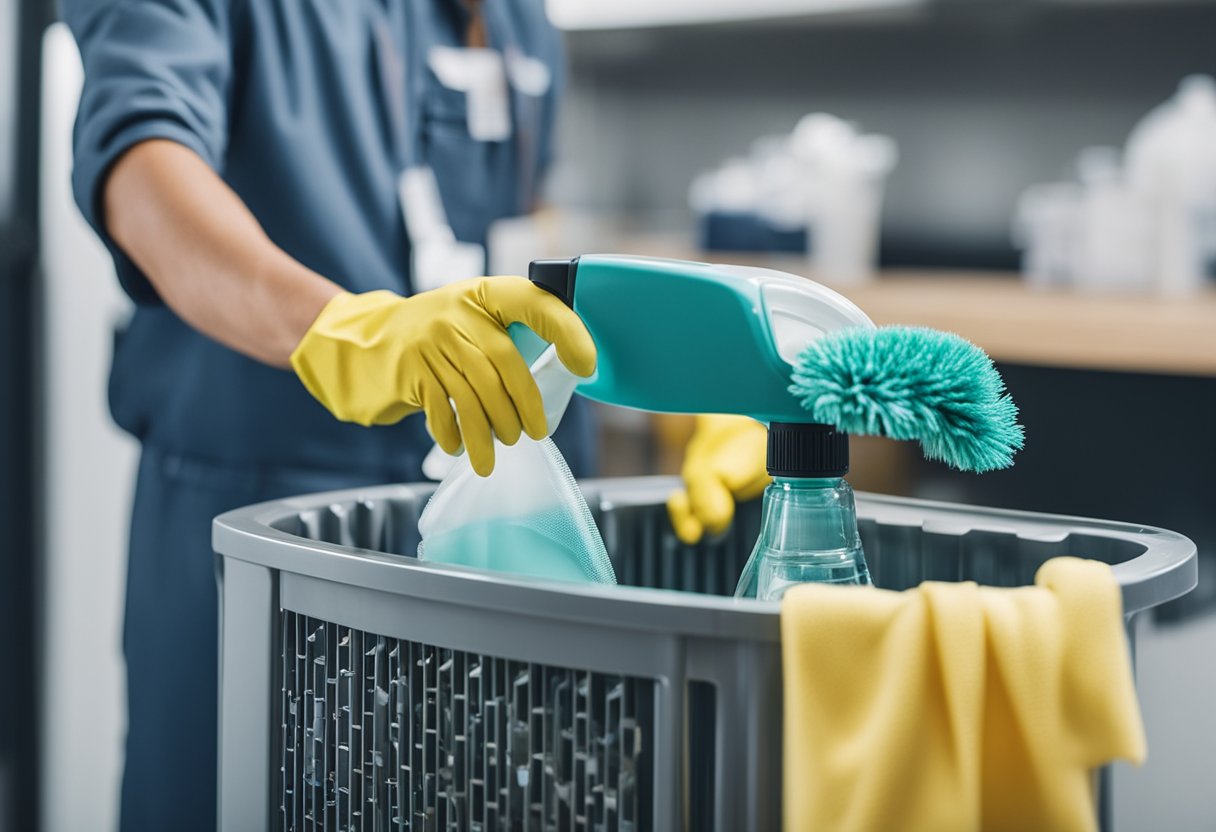
Before embarking on the task of cleaning your office radiators, it’s important to prepare properly to ensure safety and efficiency. This involves letting the radiator cool down, assembling all the required cleaning materials, and safeguarding the office space around the radiator.
Safety First: Letting the Radiators Cool Down
To begin, ensure radiators are switched off and have ample time to cool down completely. This prevents the risk of burns and allows for a more thorough cleaning, as a cool surface is easier to work with.
Gathering Necessary Cleaning Supplies
Once the radiator is cool, gather the following cleaning essentials:
- Bucket with warm soapy water
- Sponges and microfibre cloths for wiping surfaces
- A radiator cleaning brush or vacuum cleaner with a brush attachment to remove dust from within the fins
- Brush for dry dusting
- White vinegar, if opting for a natural cleaning solution
- Towels to dry the radiator after cleaning
| Supplies | Purpose |
|---|---|
| Bucket and warm water | Create a cleaning solution |
| Sponges and cloths | Apply the solution and wipe surfaces |
| Radiator brush/vacuum | Reach dust and debris between radiator fins |
| White vinegar | Natural alternative for tough grime |
| Towels | Dry the radiator after cleaning |
Protecting the Surrounding Area
Before cleaning, protect the surrounding floor and walls with dust sheets to catch spills and prevent damage to office carpets or paint. When planning to clean behind radiators, a dust sheet or towel should be carefully tucked behind to catch any falling debris or excess water.
Thorough Cleaning Process
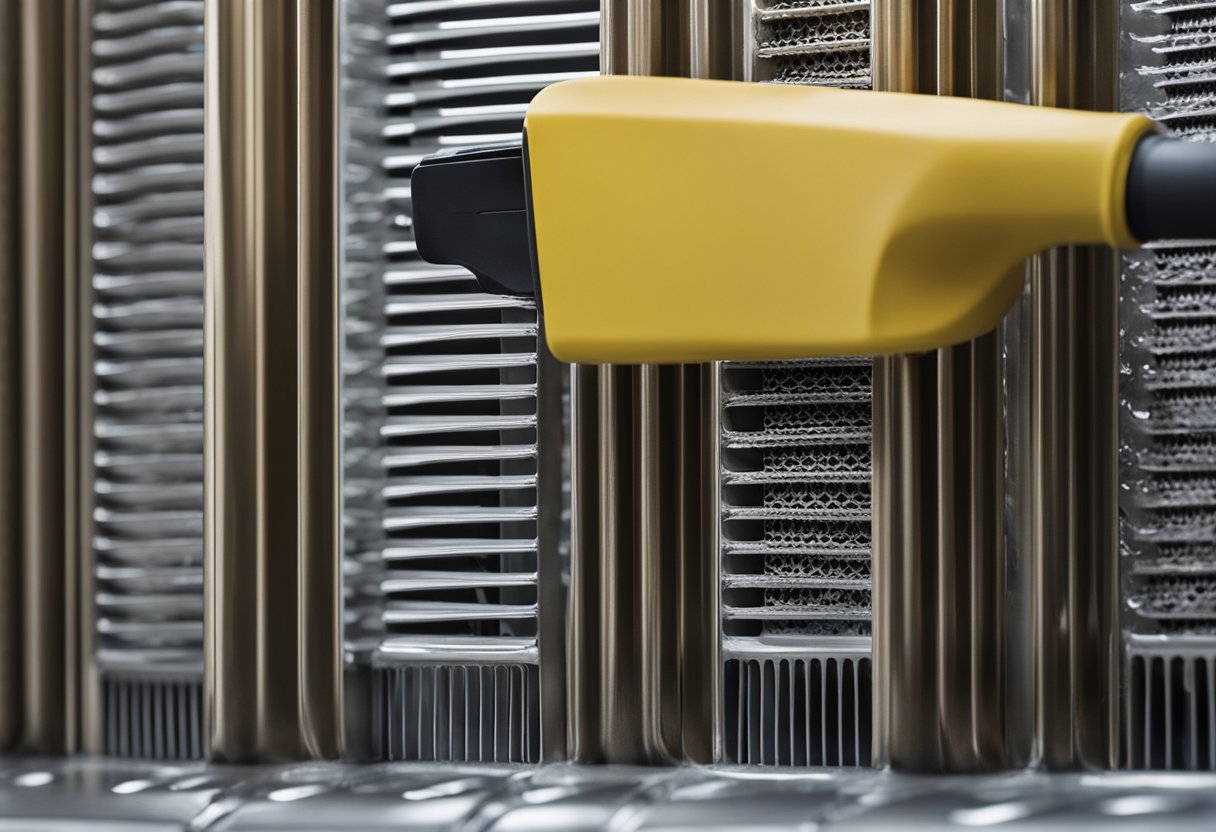
When tackling the job of cleaning an office radiator, it’s important to perform both surface dust removal and deeper cleaning to ensure efficiency and good air quality. Here are the key steps one should follow for a comprehensive clean.
Removing Surface Dust and Debris
The first step involves removing loose dust and debris to prevent it from dispersing into the air once the radiator heats up. Use a vacuum cleaner with a brush attachment to gently suction the dust from the front and back of the radiator. For the areas that are harder to reach, such as between the fins, a radiator brush or a long stick, like a metre ruler, retrofitted with a microfibre cloth, can be utilised. This method efficiently traps and removes the dust without spreading it around the room.
Deep Cleaning with Soapy Water
After dusting, prepare a bucket of warm soapy water. Use a microfibre cloth to wipe down the exterior of the radiator. If the radiator has intricate designs or tough dirt patches, a toothbrush can be employed to gently scrub these areas. Move the cloth in a systematic manner over every accessible surface, making sure to rinse the cloth periodically to avoid re-depositing dirt. For radiators with a top grill, slide a dampened cloth attached to a long stick along the interior surfaces to clean inside as well.
Tackling Tough Spots and Stains
Sometimes radiators accumulate stubborn stains or are marred by paint splatters. Tackle these with a non-abrasive cleaner and a soft cloth to avoid scratching the radiator’s finish. For particularly persistent spots, a targeted approach using compressed air can dislodge trapped dust, and a hairdryer set on cool can blow away debris from nooks and crannies. As a last resort for stubborn dirt and stains, use a slightly more aggressive brush, like an old toothbrush, and scrub gently to avoid damage.
Enhancing Radiator Efficiency
Ensuring office radiators function efficiently hinges on regular cleaning and maintenance. By addressing blockages and preventing dust accumulation, one can enhance heat convection and potentially reduce heating costs.
Removing Blockages for Better Convection
Blockages in a radiator can obstruct the flow of heat and cause cold spots. To prevent this:
- Turn off the heat: Ensure the radiator is off and cooled down before any maintenance is performed to avoid burns.
- Clean the exterior: Use a duster or vacuum to remove dust on the outside, paying special attention to the fins where dust and debris tend to accumulate.
- Bleed the radiator: This releases trapped air, which can cause cold spots. An air vent tool or a flathead screwdriver can be used to open the bleed valve until water begins to leak out and then it should be closed promptly.
By maintaining unobstructed pathways for heat, radiators can perform more efficiently, ensuring even warmth distribution.
Preventive Measures to Reduce Dust Build-up
To minimise the frequency of deep cleans and maintain radiator efficiency, implement these preventive strategies:
- Use radiator covers: Fitting a cover can help shield the radiator from dust. They should allow sufficient airflow to ensure convection is not impeded.
- Regular dusting: Incorporating radiator cleaning into weekly office cleaning routines helps prevent dust build-up.
- Strategic furniture placement: Ensure no large furniture blocks the radiator as this could hamper heat flow and collect dust.
These preventive measures can substantially reduce the need for frequent in-depth cleaning and maintain the radiator’s efficiency over longer periods. Regular maintenance not only aids in even heat distribution but can also contribute to sustained reductions in heating costs.
Final Touches and Maintenance
After thoroughly cleaning the office radiator, ensure it is dried and polished for efficient operation and a sleek appearance. Long-term maintenance is equally important to ensure the radiator’s longevity and performance.
Drying and Polishing the Radiator
After they clean the radiator, one should use a towel to dry it, carefully reaching all accessible parts to prevent rust. For polishing, a microfibre cloth offers the best results, buffing the surface to restore shine, especially on cast iron radiators where aesthetics are as important as functionality.
Long-Term Care and Expert Recommendations
Experts recommend regular cleaning as part of the radiator’s maintenance to ensure it works efficiently. Dust and dirt can hinder a clean radiator from distributing air evenly. Office radiators, whether cast iron or convector radiators, should be inspected annually by a professional to ensure they are in good working order. This may include bleeding the radiators to remove air pockets and checking for any maintenance issues that might require attention. A well-maintained radiator can prevent the need for a costly new radiator and sustain a comfortable office environment.
Frequently Asked Questions
In this section, one will find succinct answers to common queries about cleaning and maintaining office radiators, ensuring efficient operation and longevity of the heating system.
What is the most effective method for removing stains from office radiators?
For removing stains from office radiators, a gentle detergent solution applied with a soft cloth is often quite effective. Stubborn stains may require a non-abrasive cleaner specifically designed for the radiator material.
What tools are recommended for cleaning between the fins of a radiator?
To clean between the fins of a radiator, one could use a radiator brush or a vacuum cleaner attachment with a slim nozzle. These tools are effective at dislodging dust and debris that accumulates in these narrow spaces.
Can you clean the inside of a radiator without having to remove it?
It is possible to clean the inside of a radiator without removal by using a flushing technique with water and a suitable radiator cleaning solution, ensuring that the system is turned off and cooled down beforehand.
What are the best practices for cleaning old radiator interiors?
For cleaning old radator interiors, one should start by dusting and vacuuming to remove loose dirt. Then, a flush with mild detergent or specialised radiator cleaning fluid can be used to dissolve and remove the built-up grime from within.
What cleaning agents are considered optimal for maintaining indoor radiators?
For maintaining indoor radiators, neutral pH cleaning agents or mild soaps are optimal, as they do not corrode or damage the metal surfaces. You should avoid acidic or caustic substances that might harm the radiator’s finish or integrity.
Do you need office cleaning in Manchester? Contact us today for a free quote.
Other Recent Posts You Might Be Interested In …
- Pros and Cons of an Office Robot Carpet Cleaner: A Comprehensive Review
- Ways to Sanitise Your Office: Tips for a Clean and Healthy Workplace
- Tips for Tidying Before Your Office Cleaner Arrives: A Guide to Pre-Cleaning Preparation
- How to Reduce Cleaning Costs for Your Office: Expert Tips
- How Frequently Should Your Office Be Cleaned? A Guide to Maintaining a Clean Workplace
- Maximise Office Hygiene: Benefits of Hiring a Professional Window Cleaner
- How to Clean a Computer Keyboard: Your Step-by-Step Guide
- Benefits of Using Professional Cleaners for Your Office: Why It’s Worth the Investment
- Top 15 Spring Cleaning Tips for the Office
- Effective Methods for Removing Mould From Walls
- Eco-friendly Office Cleaning Tips
- Gym Cleaning Checklist and Cleaning Schedule
- Easy Microwave Cleaning Tips
- 10 Tips and Hacks When Cleaning an Office: Streamline Your Workspace Maintenance
- Pub Cleaning Checklist
- Office Kitchen Cleaning Tips for a Hygienic Workplace
- How to Clean Office Radiators: A Step-by-Step Guide
- 5 Uses Of Baking Soda When Cleaning Your Office
- The Ultimate Guide To How To Clean Your Leather Office Chair
- How Does Steam Cleaning Work: Unveiling the Mechanics of Steam Sanitation