
Introduction: How to Remove Red Wine Stains
Removing red wine stains can be a daunting task, often causing stress at the sight of a spill. Whether it occurs on clothing, carpets, or upholstery, red wine has a reputation for being one of the more challenging stains to tackle due to its deep pigmentation and tendency to set quickly. Yet with prompt and proper cleaning methods, the odds of banishing these stubborn stains increase significantly.
The key to effective red wine stain removal lies in the approach and the timeliness of the response. One must act quickly to minimise the extent of the stain’s penetration into the fabric. Various household items such as salt, sparkling water, and even white paper towels are typically recommended for immediate action. These materials help to absorb and lift the wine from the fabric, preventing it from setting and causing a permanent mark.
Professional tips often suggest a combination of techniques tailored to the type of fabric affected. From using soap and hydrogen peroxide on washable fabrics to specialised solutions for carpets and upholstery, there is a range of strategies to employ. Each method aims at breaking down the wine’s colour compounds and removing them without damaging the material. Selecting the right approach is crucial, as is the understanding that patience and careful application can lead to successful stain removal.
Immediate Response to Red Wine Spills
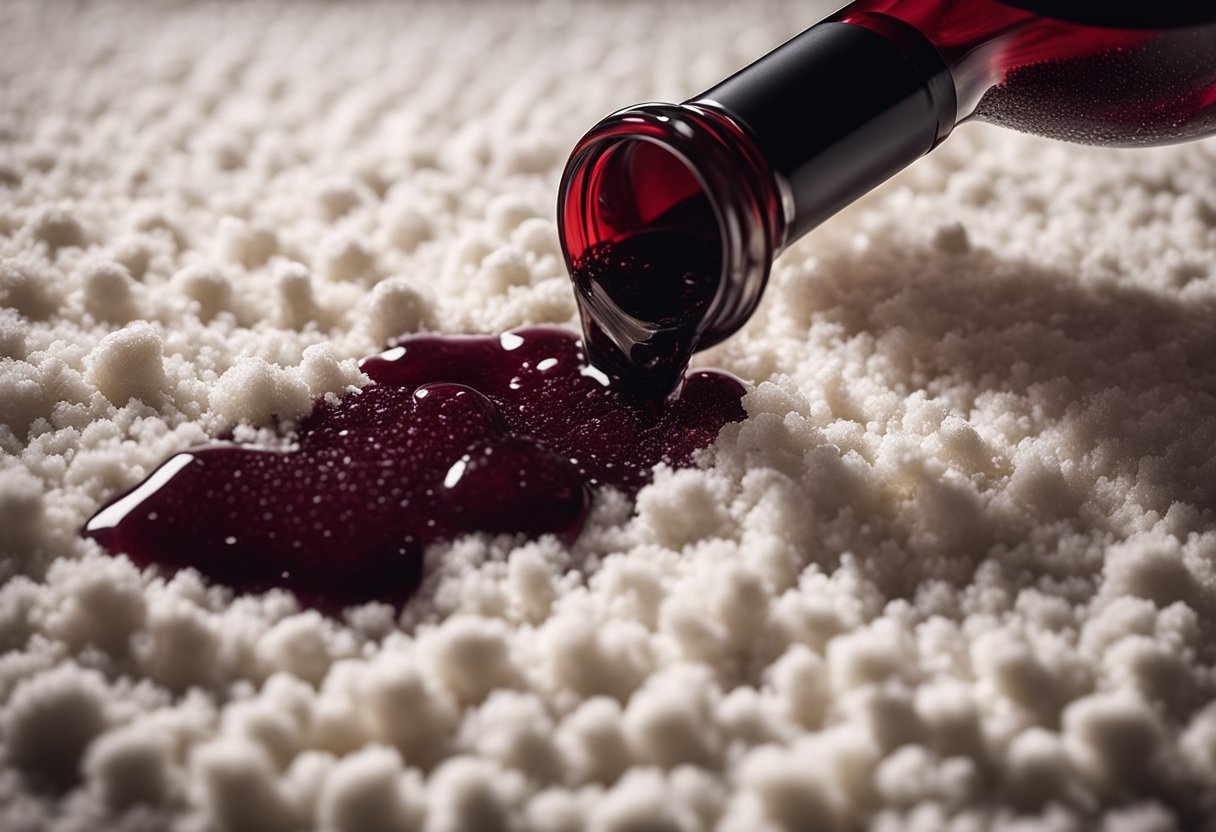
When red wine spills, one must act swiftly to minimise the chance of a permanent stain. Quick and careful blotting, followed by the application of an absorbent like salt or talcum powder, are crucial first steps.
Blotting the Stain
You should immediately blot the excess red wine from the affected area using white paper towels or a clean, white cloth. It’s important to dab gently rather than rubbing to avoid spreading the stain or embedding the wine deeper into the fabric. If available, one could also use soda water to aid in the blotting process, which may help lift more of the wine out of the material.
Steps for Blotting:
- Act quickly: As soon as the red wine spill occurs, start the blotting process.
- Gentle approach: Carefully dab the area with a white paper towel or cloth.
- Avoid rubbing: To prevent the stain from spreading, do not rub the wine.
Applying Salt or Talcum Powder
After blotting, you could cover the wet stain liberally with table salt or talcum powder. These substances help absorb the wine, drawing it out of the fabric. Leave the salt or talcum powder on the stain for a few minutes to a few hours, depending on the severity of the spill, then scoop away the salt or vacuum up the talcum powder.
Effective Absorbents:
- Table salt: Pour a good amount of table salt over the damp wine stain.
- Talcum powder: Alternatively, talcum powder can also be used to absorb the wine.
By following these initial steps, the chances of successfully removing a red wine spill are greatly increased. Remember, the key is to act quickly and use gentle techniques to treat the affected area.
Household Remedies for Red Wine Stains
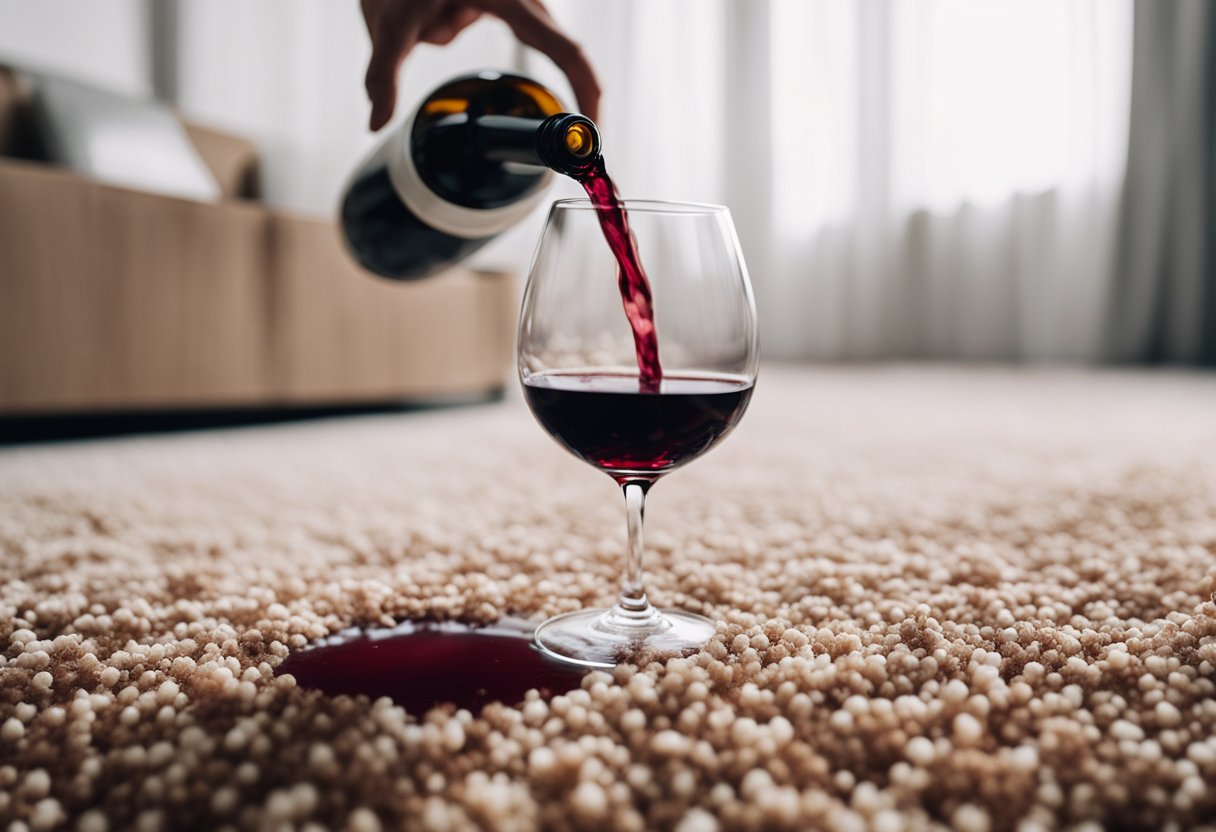
When confronted with a red wine spill, one need not panic. A number of household products can be employed with efficacy to tackle the stain. These include white vinegar, club soda, and baking soda, all of which can be used quickly to mitigate the stain before it settles in.
Using White Vinegar and Soap
For a fresh red wine stain, a solution of white vinegar and soap can be quite effective. The process would be:
- Blot the stain with a clean cloth to absorb excess wine.
- Mix a solution of one part white vinegar to two parts water.
- Apply the solution to the stain and let it sit for a few minutes.
- Follow up with a touch of mild soap, dabbing gently.
- Rinse with water and wash at the highest temperature suitable for the fabric.
Club Soda Method
Club soda is also renowned for its stain removal abilities, especially on red wine:
- Blot as much wine as possible without rubbing it into the fabric.
- Pour club soda directly on the stain.
- Allow it to fizz and lift the stain.
- After several minutes, blot again with a clean, dry cloth.
- If necessary, repeat the process or follow with a wash.
Baking Soda Solution
Should the stain be particularly stubborn, a baking soda paste may provide the necessary cleaning power.
- Prepare a paste using a 3:1 ratio of baking soda to water.
- Apply this paste liberally over the stain following a blotting session.
- Once the paste is dry, vacuum up the residue.
- If the stain persists, consider applying a mixture of three parts hydrogen peroxide to one part soap—test for colourfastness first on an inconspicuous area.
Each method utilises common kitchen items, and it should be noted that the key is to act swiftly before the wine has a chance to dry. Multiple applications may be required, and cleaners like hydrogen peroxide and milk are alternative solutions that some may opt for, depending on the severity and setting of the stain.
Commercial Wine Stain Removers
When tackling red wine spills, apart from the homemade solutions already mentioned, you can also consider a range of commercial cleaning products specifically designed to remove red wine stains. These products often contain active ingredients that break down the pigments in wine, making the stains easier to lift from fabrics and other materials.
Wine Away and OxiClean
Wine Away is a well-known red wine stain remover, which is reported to be particularly effective on fresh stains. Its primary component is to break down the anthocyanins—the pigments in red wine—that cause the visible stain. For optimal results, users should apply Wine Away to the affected area before the stain has a chance to set.
- Application: Spray directly on stain, let sit up to five minutes, and then launder as usual.
- Effectiveness: Typically more effective on fresh stains.
In contrast, OxiClean uses a different approach, harnessing the power of oxygen through its active ingredient, sodium percarbonate, which becomes hydrogen peroxide when mixed with water. This reaction targets and dislodges the red wine stain molecules.
- Application: Create a solution by mixing with water, apply to the stain, and allow it to soak.
- Effectiveness: Can work on older, set-in stains with extended soaking time.
Hydrogen Peroxide Mixtures
Hydrogen peroxide mixtures are often included in commercial stain removers for their oxidising properties, which help to lighten and break down red wine stains. It is important to test these mixtures on an inconspicuous area first to ensure that there is no discolouration.
- Method of use: Typically combined with a detergent, directly applied to the stain, and left to work before rinsing.
- Safety note: Hydrogen peroxide can bleach or discolour some fabrics, so it must be used with care.
These commercial removers offer specialised solutions designed for the tough pigments in red wine, and their instructions should be closely followed for best results.
Treating Wine Stains on Various Fabrics and Surfaces
When red wine is spilt, the type of fabric or surface it lands on dictates the appropriate method for removal. Acting swiftly and using the right technique can mitigate the risk of a stain becoming permanent.
Carpet and Upholstery
For carpets and upholstery, one should first blot the stain with a clean, dry cloth to absorb as much wine as possible. Then, they can sprinkle a generous amount of table salt on the stain, which helps to draw out the moisture. After allowing it to sit, vacuum it up. If the stain persists, a solution of equal parts dishwashing liquid and white vinegar with warm water can be applied. Using a sponge, they should work this solution into the stain and then rinse with water. Always check on an inconspicuous area first to ensure that there is no discolouration.
- Initial Action: Blot with a dry cloth
- Salt Application: Sprinkle and wait, then vacuum
- Cleaning Solution: Mix dishwashing liquid, white vinegar, and water
Clothing and Tablecloth
Immediately after a red wine spill on clothing or a tablecloth, it’s crucial to blot away excess wine. Then, cover the area with salt if the fabric is washable. Afterwards, the item should be soaked in cool water or, if appropriate, washed according to the garment’s care label. For persistent stains, applying a dedicated stain remover or a mixture of baking soda and water before laundering can be effective.
- Blot: Remove excess liquid immediately
- Pre-treat: Cover with salt and soak
- Laundering: Use stain remover or baking soda mixture pre-wash
Delicate and Dry-Clean Only Fabrics
When dealing with delicate or dry-clean only fabrics, it is advisable to resist the urge to rub the stain. Instead, gently blot it and take the item to a professional cleaner as soon as possible. If there is a delay, carefully applying a small amount of cool water can help to dilute the wine. Inform the cleaner about the nature of the stain to ensure they use the most appropriate treatment.
- Immediate Care: Gently blot, avoid rubbing
- Professional Cleaning: Seek assistance promptly
- Preventative Measure: Dilute with cool water if immediate cleaning isn’t possible
Preventive Measures and Aftercare
Ensuring the longevity of textiles involves both prevention of stains and thorough aftercare post-cleaning. Taking proactive steps can minimise the risk of wine stains, while regular upkeep maintains the cleanliness and appearance of fabrics.
Preventing Future Stains
Immediate action is crucial when dealing with red wine spills. Keep at hand a cleaning solution that is effective for their specific fabric type. Certain fabrics may benefit from a mixture of distilled white vinegar and water. For immediate absorption of spills on harder surfaces or thicker carpets, having cat litter close by can also be surprisingly effective, as it can help absorb the liquid quickly before it sets.
Regular Maintenance and Vacuuming
Textiles should be regularly maintained to prolong their cleanliness and to prevent the setting of any accidental spills. Vacuuming carpets and upholstery can remove dirt and debris, which may otherwise compound future stains. When laundering textiles that have come into contact with red wine:
- Avoid hot water, as it can set the stain.
- Use bleach only on safe fabrics and according to the manufacturer’s instructions.
- For washable textiles, a washing machine cycle with an appropriate cleaning agent can help lift recent stains.
Regular incorporation of these practices helps to ensure that fabrics remain in pristine condition, ready to face any further spillages with resilience.
Frequently Asked Questions
When tackling red wine stains, timely action is crucial. Selecting the right method depends on the fabric and the age of the stain.
What is the most effective method for removing red wine stains from clothing?
For clothing, first blot the stain with a dry cloth and then apply a mixture of hydrogen peroxide and dishwashing soap, ensuring the fabric can withstand it. Washing the garment at a high temperature after treatment can help remove any lingering discolouration. Always check the label on clothing first.
Can I eliminate red wine stains from my carpet, and if so, how?
Red wine stains on carpets can be managed by blotting up excess wine, then cleaning with a solution of two parts hydrogen peroxide to one part dishwashing soap, approved by testing on a discreet area. A professional cleaning solution designed for carpets may be necessary for stubborn stains.
Is it possible to extract old red wine stains, and what techniques should I employ?
Old red wine stains require persistence. After wetting the stain with warm water, a solution containing dishwashing soap and white vinegar can be applied. Subsequent blotting and washing are necessary, with repeated treatments often required for complete stain removal.
What steps should be taken to remove a red wine stain from upholstery?
Upholstery should be blotted to remove excess wine, then cleaned with a mixture of dishwashing soap and warm water. It’s essential to test this solution on an inconspicuous area of the upholstery first to check for colour fastness.
Are there any household items like vinegar or baking soda that are effective in treating red wine spills?
Vinegar, when mixed with dishwashing liquid, can help lift red wine stains, while baking soda can be applied to absorb the liquid and then vacuumed off once it has dried, aiding in the stain removal process.
Should I treat red wine stains with hot or cold water to ensure the best chance of removal?
Always use cold water to treat red wine stains initially, as hot water can set the stain further into the fabric. Cold water helps to loosen the stain, making it easier to lift during subsequent cleaning steps.
Do you need office cleaning in Manchester? Contact us today for a free quote.
Take a look at some of our other recent articles on office cleaning …
- Pros and Cons of an Office Robot Carpet Cleaner: A Comprehensive Review
- Ways to Sanitise Your Office: Tips for a Clean and Healthy Workplace
- Tips for Tidying Before Your Office Cleaner Arrives: A Guide to Pre-Cleaning Preparation
- How to Reduce Cleaning Costs for Your Office: Expert Tips
- How Frequently Should Your Office Be Cleaned? A Guide to Maintaining a Clean Workplace
- Maximise Office Hygiene: Benefits of Hiring a Professional Window Cleaner
- How to Clean a Computer Keyboard: Your Step-by-Step Guide
- Benefits of Using Professional Cleaners for Your Office: Why It’s Worth the Investment
- Top 15 Spring Cleaning Tips for the Office
- Effective Methods for Removing Mould From Walls
- Eco-friendly Office Cleaning Tips
- Gym Cleaning Checklist and Cleaning Schedule
- Easy Microwave Cleaning Tips
- 10 Tips and Hacks When Cleaning an Office: Streamline Your Workspace Maintenance
- Pub Cleaning Checklist
- Office Kitchen Cleaning Tips for a Hygienic Workplace
- How to Clean Office Radiators: A Step-by-Step Guide
- 5 Uses Of Baking Soda When Cleaning Your Office
- The Ultimate Guide To How To Clean Your Leather Office Chair
- How Does Steam Cleaning Work: Unveiling the Mechanics of Steam Sanitation