
Introduction: How to Clean with Apple Cider Vinegar
Apple cider vinegar is becoming increasingly prominent as an effective and eco-friendly cleaning agent in homes. Derived from fermented apple juice, its naturally acidic properties make it a potent alternative to commercial cleaning products. With its golden hue and distinct smell, apple cider vinegar is praised for its versatility and ability to tackle a wide range of cleaning tasks. From deodorising fabrics to polishing stainless steel, it offers a sustainable solution for those seeking a more natural approach to cleanliness.

In addition to being environmentally friendly, cleaning with apple cider vinegar is also an affordable option. Its cost-effectiveness is particularly appealing given the rising prices of conventional cleaning supplies. Furthermore, it is widely accessible and can be used in various dilutions to suit different cleaning needs across the household. Whether it’s cutting through grease, removing lime scale, or simply ensuring surfaces are hygienic, apple cider vinegar proves to be a reliable tool.
While there are myriad uses for apple cider vinegar in cleaning, it is also important to be aware of the types of surfaces and materials that are sensitive to acidic cleaners. Care should be taken when using apple cider vinegar around natural stone or certain types of wood, where it may cause damage. However, for the vast majority of cleaning tasks, its natural cleaning power is both safe and effective, making apple cider vinegar a staple in the arsenal of eco-conscious cleaners.
The Science of Cleaning with Apple Cider Vinegar
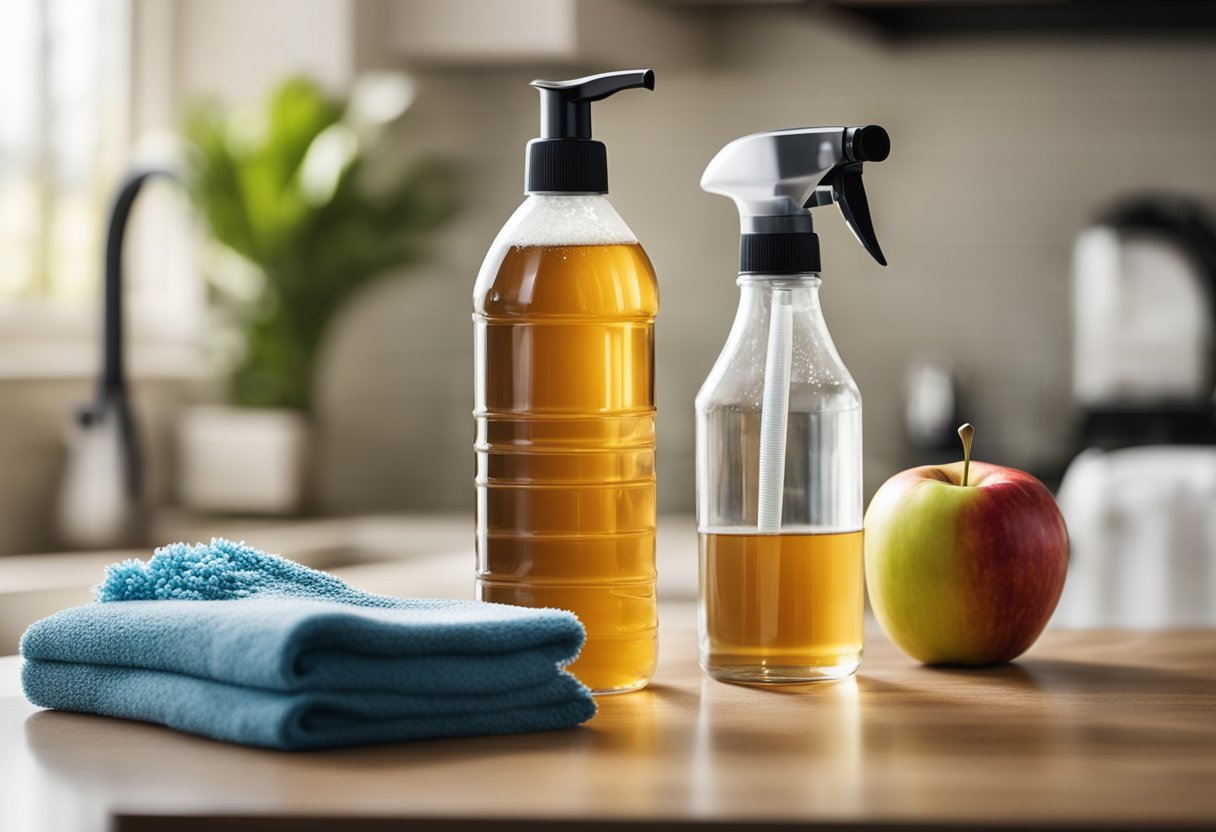
Apple cider vinegar, recognised for its powerful cleaning capabilities, owes much of its efficacy to the presence of acetic acid. It handles a variety of tasks, offering a non-toxic, environmentally friendly alternative to traditional cleaners.
The Benefits of Acetic Acid
The primary component of apple cider vinegar is acetic acid, which typically comprises around 5-6% of this versatile liquid. Acetic acid’s effectiveness stems from its ability to dissolve dirt, grime, and oily residues, making it an excellent agent for cleaning surfaces. Its antibacterial and antifungal properties contribute to its ability to act as a disinfectant, eliminating a wide range of pathogens from household surfaces. Moreover, this component is responsible for the acidity that neutralises odours, leaving spaces smelling fresh without the use of artificial fragrances.
Comparing Vinegar to Other Cleaning Agents
When it comes to determining the most suitable cleaning solutions, it is useful to compare their properties and effects:
| Property | Apple Cider Vinegar | Traditional Cleaning Agents |
|---|---|---|
| Toxicity | Non-toxic, safe | Often contains harmful chemicals |
| Environmental Impact | Environmentally friendly | Can be damaging to the environment |
| Cleaning Power | Powerful, effective against various stains | Usually strong, can be abrasive |
| Antimicrobial Action | Antibacterial and antifungal | Specific to product formulation |
| Odour | Natural, pungent | Often artificially scented |
While apple cider vinegar might not be as strong as certain chemical cleaners designed for tough build-ups, it is a safe and non-toxic option, perfect for routine cleaning tasks. Its versatility extends to various areas of the home, and when diluted, it can serve as a gentle yet effective cleaning solution across a spectrum of applications. Additionally, apple cider vinegar is a more environmentally friendly option, breaking down naturally without leaving harmful residues.
Preparation of Vinegar Cleaning Solutions
Crafting effective vinegar-based cleaning solutions involves diluting apple cider vinegar with water and can include additional natural ingredients to tackle different cleaning tasks. One can create a variety of mixtures for use in a spray bottle, enhancing their home-cleaning arsenal.
Creating a Basic Vinegar Cleaning Mixture
To prepare a fundamental vinegar cleaning solution, mix two parts apple cider vinegar with one part water in a spray bottle. This solution is suitable for dealing with water stains and soap scum on various surfaces. For glass surfaces, a ratio of 1:1 between vinegar and water is usually recommended. Using a spray bottle allows for easy application and coverage of the areas in need of cleaning. After application, one should use a soft, nylon-bristled brush or a sponge for scrubbing and a microfibre cloth for wiping surfaces clean, ensuring no residue is left behind.
Enhanced Mixtures With Additional Natural Ingredients
For more challenging cleaning tasks, or to add a pleasant aroma, enhancing the basic mixture with additional natural ingredients is beneficial. Mix in baking soda to the vinegar solution to create a more abrasive cleaner, which is highly effective for tough grime and stains. Incorporating essential oils, like tea tree oil, not only adds a refreshing scent but also has natural antibacterial properties. When adding essential oils, a few drops will suffice to mask the strong vinegar odour and promote a fresh fragrance. This enhanced mixture remains safe for most surfaces while boosting cleaning power.
Applications for Various Household Surfaces
When using apple cider vinegar for cleaning, its natural acidity is highly effective against grime, bacteria, and mineral deposits. It can also deodorise and bring back the shine to various surfaces without the use of harsh chemicals.
Kitchen Clean-Up
Countertops and Sinks: Apple cider vinegar works well on stainless steel sinks and granite countertops. For daily cleaning, dilute with water and wipe down surfaces. For tougher stains, apply undiluted vinegar directly, allow it to sit for a few minutes, then scrub gently.
Appliances: For microwaves and dishwasher interiors, a solution of half water and half vinegar can help to remove grime and food spills. Spray and wipe stainless steel appliances for a streak-free finish.
Sparkling Bathrooms
Tiles and Showerheads: Use a spray bottle filled with a mixture of vinegar and water to tackle tile grime and hard water stains. Spray the solution onto showerheads to dissolve mineral deposits, then rinse after a few minutes.
Toilets and Sinks: For toilet bowls, pour undiluted apple cider vinegar in and brush thoroughly. To clean sinks and deodorise drains, pour a cup of vinegar down the sink and rinse after 30 minutes.
Living Area Refresh
Windows and Mirrors: Mix equal parts of vinegar and water in a spray bottle for a cost-effective glass cleaner. Spray onto windows and mirrors, then wipe away with a lint-free cloth for a spotless finish.
Furniture and Hard Surfaces: Wipe down surfaces such as walls and laminate furniture with a cloth dampened with a vinegar and water solution to remove fingerprints and smudges.
Maintaining Clean Floors and Carpets
Floors: For hardwood, tile, or laminate flooring, mix a solution of vinegar and warm water. Mop the floors as usual, wringing out excess liquid to prevent water damage.
Carpets: To remove carpet stains, mix equal parts vinegar and water in a spray bottle. Apply to the stain, let soak, then dab with a clean cloth. For odours, sprinkle baking soda on the carpet, allow it to sit, then vacuum before misting with a vinegar solution. Always test on a small area of the carpet not normally seen first.
Special Considerations and Tips
When using apple cider vinegar for cleaning, one must consider the type of stain, the surface being cleaned, and the appropriate dilution of the vinegar. The following tips will provide guidance on effectively using this versatile cleaner.
Working with Different Types of Stains
- Grease: To tackle grease, create a solution with equal parts of apple cider vinegar and warm water. The acidic nature helps cut through the grease, facilitating its removal.
- Mildew: For mildew, use full-strength vinegar directly on the affected area before scrubbing off. Apple cider vinegar’s low pH makes it an effective combatant against mildew.
Cleaning Electronics and Appliances
- Coffee Maker: Run a brewing cycle with a mixture of equal parts water and apple cider vinegar to descale and clean the appliance. Follow up with several cycles of plain water to rinse.
- Oven: A paste made from baking soda and apple cider vinegar can be applied to the interior surfaces of the oven. A steam clean with a bowl of boiling water and vinegar inside the oven helps soften hardened food deposits.
Utilising Apple Cider Vinegar Outdoors
- Garden: As a non-toxic alternative to pesticides, diluted apple cider vinegar can act as a deterrent for garden pests. However, be mindful of plant sensitivity to acidity.
- Drain Cleaner: For clogged drains, pour a pot of boiling water followed by a cup of baking soda and one cup of vinegar. This natural drain cleaner provides a safer option compared to harsh chemicals.
Health and Safety Advice
When using apple cider vinegar for cleaning, it is vitally important to consider its safe application, especially in homes with pets and children, and be aware of potential allergic reactions.
Ensuring Safe Use in Homes with Pets and Children
Apple cider vinegar is known for its antibacterial properties, making it a beneficial and non-toxic cleaner for households. However, its safety depends on proper dilution and storage. Apple cider vinegar should be diluted with water to minimise any potential irritation to pets and children, who can be more sensitive to cleaning products. For homes with pets and children, always ensure that cleaning solutions are stored securely and out of reach.
- Dilution ratio: Typically, a 1:1 ratio with water is effective.
- Storage: Place in a locked cupboard or on a high shelf.
Allergic Reactions and Sensitivities to Consider
While touted for health benefits, apple cider vinegar may still cause adverse reactions in some individuals. Those with allergies to vinegar or any of its components should avoid its use. Here are key aspects to keep in mind:
- Patch test: Apply a small amount on an inconspicuous area to check for any reaction before use.
- Ventilation: Keep areas well-ventilated during and after cleaning to prevent irritation from the acetic acid fumes.
It is recommended to wear gloves when using vinegar-based cleaning solutions to protect one’s skin, and in case of contact with eyes, to rinse immediately with plenty of water.
Frequently Asked Questions
This section addresses common inquiries regarding the use of apple cider vinegar for cleaning, providing clear and specific guidance on its benefits and applications.
What are the benefits of using apple cider vinegar as opposed to white vinegar for cleaning?
Apple cider vinegar contains natural antibacterial properties, making it an effective and environmentally friendly cleaning agent. Its odour-neutralising effects are especially beneficial for removing lingering smells.
What is an effective method for cleaning floors with apple cider vinegar?
For cleaning floors, one can mix a solution of 1 cup of apple cider vinegar with 4 litres of water. This mixture can effectively remove dirt without leaving residue.
Is it necessary to rinse surfaces after cleaning them with apple cider vinegar?
It is not usually necessary to rinse surfaces after using a diluted apple cider vinegar solution, as it dries without streaking and does not leave a strong odour.
Can apple cider vinegar be used safely to clean clothing items?
Apple cider vinegar can be safely used to clean clothing items by adding half a cup to the washing machine cycle, which can help remove odours and soften fabrics.
What is the best way to use apple cider vinegar for cleaning glass surfaces?
To clean glass surfaces, mix equal parts of apple cider vinegar and water in a spray bottle. Apply the solution to glass and wipe with a microfiber cloth for a streak-free finish.
Do you need office cleaning in Manchester? Contact us today for a free quote.
Other Recent Posts You Might Be Interested In …
- Pros and Cons of an Office Robot Carpet Cleaner: A Comprehensive Review
- Ways to Sanitise Your Office: Tips for a Clean and Healthy Workplace
- Tips for Tidying Before Your Office Cleaner Arrives: A Guide to Pre-Cleaning Preparation
- How to Reduce Cleaning Costs for Your Office: Expert Tips
- How Frequently Should Your Office Be Cleaned? A Guide to Maintaining a Clean Workplace
- Maximise Office Hygiene: Benefits of Hiring a Professional Window Cleaner
- How to Clean a Computer Keyboard: Your Step-by-Step Guide
- Benefits of Using Professional Cleaners for Your Office: Why It’s Worth the Investment
- Top 15 Spring Cleaning Tips for the Office
- Effective Methods for Removing Mould From Walls
- Eco-friendly Office Cleaning Tips
- Gym Cleaning Checklist and Cleaning Schedule
- Easy Microwave Cleaning Tips
- 10 Tips and Hacks When Cleaning an Office: Streamline Your Workspace Maintenance
- Pub Cleaning Checklist
- Office Kitchen Cleaning Tips for a Hygienic Workplace
- How to Clean Office Radiators: A Step-by-Step Guide
- 5 Uses Of Baking Soda When Cleaning Your Office
- The Ultimate Guide To How To Clean Your Leather Office Chair
- How Does Steam Cleaning Work: Unveiling the Mechanics of Steam Sanitation